


Macrophage phenotype modulation via 2-hydroxypropyltrimethyl ammonium chloride chitosan: a novel strategy for managing allergic rhinitis

Abstract
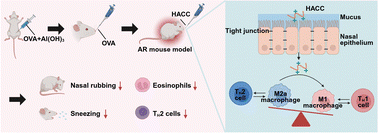
Allergic rhinitis (AR) is a chronic nasal disease primarily mediated by immunoglobulin E (IgE). This condition significantly impairs patients’ quality of life. Current treatments have limited clinical effectiveness. Although TH2 lymphocytes are well established as key regulators in AR pathogenesis, recent evidence underscores the pivotal role of M2 macrophages, particularly the M2a subtype, in exacerbating type 2 inflammation through recruitment of TH2 cells. To address this, 2-hydroxypropyltrimethyl ammonium chloride chitosan (HACC) is developed, a positively charged macromolecular polysaccharide that is water-soluble and has good biocompatibility. In vitro experiments demonstrate its ability to reprogram M2a macrophages into the M1 phenotype and suppress their release of chemotactic factors. In vivo studies further confirm that HACC effectively alleviated AR symptoms in a mouse model, significantly reducing inflammatory cell infiltration in the nasal mucosa, and partially reversed the TH1–TH2 imbalance in a mouse model. Notably, its therapeutic efficacy is comparable to cetirizine, a clinically approved treatment for AR. This study highlights modulation of macrophage phenotypes as a promising strategy to inhibit type 2 inflammation and achieve effective management of allergic rhinitis.
 Please wait while we load your content...


