


Tannic acid-loaded mesoporous silica particles as tissue adhesives for enhanced wound healing
 b
Sungbaek
Seo
*a
b
Sungbaek
Seo
*a
Abstract
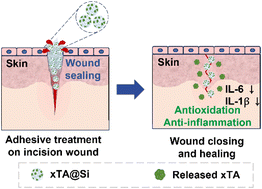
The application of silica nanoparticles as alternatives to commercial cyanoacrylate is limited by their insufficient adhesion strength to tissues. To enhance their adhesion strength, we developed mesoporous silica particles (3.4 ± 0.4 μm particle size, 12.5 nm pore size) which provided more adsorption sites for biopolymers or proteins in neighboring tissues. It was achieved via tannic acid loading as a crosslinked form in the silica particles (xTA@Si). The adhesion strength of xTA@Si (2641 ± 47 Pa) was 4.3-fold higher than that of the smooth-surfaced silica particles (609 ± 12 Pa) between two poly(dimethylacrylamide) hydrogels. In vitro and in vivo studies demonstrated that the mesoporous properties of the silica particles directly correlated with adhesion strength. In addition, on day 5 after adhesive treatment in an in vivo mouse skin wound, the inflammation score (+; presence of very few inflammatory cells) of xTA@Si was much lower than that after treatment with Dermabond (cyanoacrylate-based commercial tissue adhesives, +++++; exaggerated inflammatory cellularity) or smooth-surfaced silica particles (++++). The strong antioxidant activity of tannic acid loaded in the silica adhesives reduced the anti-inflammatory response during the wound healing process.
 Please wait while we load your content...


