


Advances in the application of metal–organic frameworks in ophthalmology

Abstract
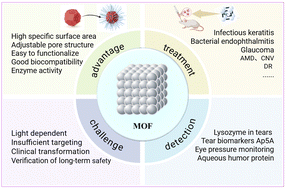
The global burden of vision impairment and blindness caused by eye diseases continues to grow. The eye's inherent physiological barriers—such as the corneal barrier and blood–retinal barrier—lead to challenges in traditional therapies, including low drug bioavailability, poor targeting, and the need for frequent administration. Metal–Organic Frameworks (MOFs), as a class of emerging porous materials, offer promising solutions to overcome these delivery bottlenecks due to their tunable pore structures, high specific surface areas, and ease of functionalization. This review systematically summarizes the latest research advances of MOFs in ophthalmology, focusing on their application as smart carriers for treating various eye diseases including infectious keratitis, bacterial endophthalmitis, glaucoma, age-related macular degeneration, and diabetic retinopathy. It also highlights their innovative use as sensors for tear biomarker detection, intraocular pressure monitoring, and aqueous humor proteomics analysis. Furthermore, this paper delves into ocular delivery strategies for MOFs and systematically analyzes the challenges and future research directions for their clinical translation. It concludes that optimizing material design, strengthening interdisciplinary collaboration, and developing multifunctional integrated platforms are key to advancing this field.
 Please wait while we load your content...


