


Large pore-sized organosilica nanoparticles with controlled release of glucose oxidase for tumor-specific cascaded catalytic therapy
 *cd
and
*cd
and
Abstract
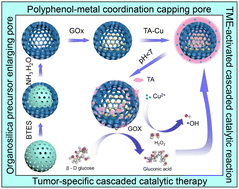
The ever-growing demand for efficient tumor-targeted delivery of high molecular-weight biomolecules calls for large pore-sized silica nanoparticles with a controlled release feature. Herein, a general organosilica precursor-enlarged micelle (OP-EM) method is introduced for facile synthesis of sub-50 nm large pore-sized hollow mesoporous organosilica nanoparticles (LPHMON). Then an extremely convenient “pore-capping” strategy is proposed to prevent the premature leakage of payloads based on polyphenol–metal coordination chemistry. Following the encapsulation of glucose oxidase (GOx) and surface coating with a tannic acid (TA)–Cu complex, the TA–Cu covered, GOx-loaded LPHMON (LPHMON-GTC) can not only avoid the GOx leakage-induced toxicity, but also go through three-step cascaded catalytic reactions (acidity-activated TA–Cu disassembly, GOx-catalyzed glucose oxidation, and a Cu2+-mediated Fenton-like reaction), which will facilitate the realization of endogenous tumor-specific cascaded catalytic therapy, promising precise trigger-free treatment of various cancers with minimized side effects.
 Please wait while we load your content...


