


Platelet-derived membranes as biomimetic interfaces for engineering functional nanocarriers in targeted drug delivery and diagnostics: a systematic review

Abstract
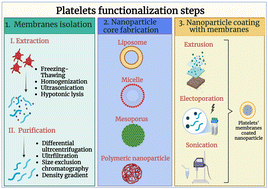
The use of platelet-derived membranes as functional biomaterials has emerged as a promising solution to overcome major limitations in nanoparticle-based drug delivery and diagnostic platforms. These biologically inspired interfaces offer a unique combination of immune evasion, biocompatibility, and receptor-mediated targeting capabilities. This PRISMA-based systematic review synthesizes research from 2014 to 2024 on the use of platelet membranes to engineer hybrid nanocarriers for targeted delivery and detection. We critically examine strategies for membrane extraction (e.g., ultrasonication, freeze-thawing, co-extrusion), nanoparticle fusion techniques, and therapeutic functionalization using chemotherapeutics, peptides, cytokines, and photothermal agents. The resulting biomimetic nanosystems demonstrate dual diagnostic and therapeutic (theranostic) potential in diverse fields, including oncology, thrombosis, and inflammatory diseases. We further discuss the development of hybrid platforms, such as red blood cell–platelet membrane combinations, which enhance systemic circulation and targeting efficiency. The review highlights the clinical and translational relevance of platelet membrane-coated nanocarriers, with a focus on their material properties, interaction with biological barriers, and potential for immune escape. Remaining challenges include manufacturing scalability, membrane heterogeneity, and long-term safety. Continued advancement in biointerface engineering and hybridization techniques is expected to expand the applicability of these systems within the broader context of precision nanomedicine.
 Please wait while we load your content...


