


Multidimensional information detection of liver cancer cell exosomes treated with shikonin

Abstract
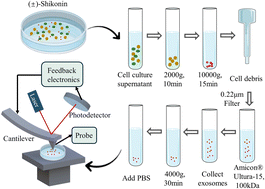
Exosomes were recently recognized as mediators of intercellular communication and as potential biomarkers associated with cancer. However, the multidimensional characterization of exosomes secreted by cancer cells after drug treatment remains largely unexplored. In this study, the morphological and mechanical differences among SMMC-7721-exos, HepG2-exos, and HL-7702-exos were comparatively analyzed under both air and liquid conditions, and the effects of shikonin on the morphology and nanomechanical properties of SMMC-7721-exos were further investigated. Exosomes were characterized by SEM, NTA, and WB analyses. AFM was then employed to compare the morphology, adhesion force, and Young's modulus of SMMC-7721-exos, HepG2-exos, and HL-7702-exos under air and liquid conditions. Compared with those observed under the air condition, the adhesion forces of SMMC-7721-exos, HepG2-exos, and HL-7702-exos increased under the liquid condition, and the Young's modulus of HL-7702-exos increased by approximately 1.7 folds. Subsequently, the morphology and mechanical properties of exosomes secreted by cancer cells after shikonin treatment were examined by AFM. Compared with that in the untreated group, the adhesion force of SMMC-7721-exos decreased after drug treatment. In contrast, both the adhesion force and Young's modulus of SMMC-7721-exos exhibited an increasing trend with increasing shikonin concentration (0.5 µM, 1 µM, and 2 µM). These results indicated that shikonin altered the mechanical properties of exosomes by acting on cancer cells, potentially disrupting exosome-mediated intercellular interactions. This effect contributed to elucidating the antitumor mechanism of shikonin and provided novel insights for studying tumor metastasis and prognosis.
 Please wait while we load your content...


