


Zn-MOF-8-based nitrogen-doped mesoporous carbon/multi-walled carbon nanotube-modified electrodes for highly sensitive detection of isoquercitrin
 *abc
*abc
Abstract
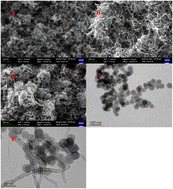
In this study, nitrogen-doped mesoporous carbon (NMC) was synthesized using Zn-MOF-8 as a template, followed by further reaction with multi-walled carbon nanotubes (MWCNTs) to prepare the NMC/MWCNTs nanocomposite. Characterization of the composite was performed using scanning electron microscopy (SEM), energy dispersive spectroscopy (EDS), X-ray photoelectron spectroscopy (XPS), and electrochemical methods. The NMC/MWCNTs/GCE developed from this nanocomposite achieved highly sensitive and stable detection of IQ. On the surface of NMC/MWCNTs electrodes, the hydroxyl groups at the 3′- and 4′-positions of the C ring in the isoquercitrin (IQ) structure are oxidized to 2-quinone while losing two hydrogen atoms, demonstrating the modified electrode's outstanding catalytic oxidation performance. The GCE modified with the NMC/MWCNTs composite at a concentration of 0.6 mg mL−1 exhibited a broad linear range of 0.1–65 µM for IQ detection in PBS buffer solution at pH 6.5, with a detection limit of 0.087 µM (signal-to-noise ratio of 3). The electrochemical method for IQ detection demonstrated advantages including convenience, high sensitivity, and low cost. Furthermore, the sensor was evaluated for stability, repeatability, and interference resistance, and applied to IQ detection in real samples.
 Please wait while we load your content...


