



Stability-indicating study of iguratimod: isolation and characterization of a potential degradant using preparative HPLC-MS, LC-HRMS, and NMR techniques

Abstract
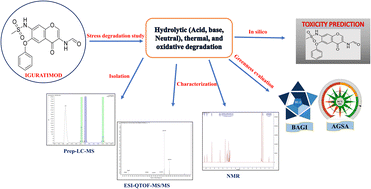
Iguratimod (IGRD), a disease-modifying antirheumatic drug, emerged as a promising therapeutic agent due to its potent immunomodulatory effect in autoimmune diseases. In this study, a green and selective stability-indicating RP-HPLC-DAD method was established and validated to quantify IGRD in the tablet dosage form and all degradation products. The method employed an eco-friendly, isocratic approach using an Acclaim™ AmG C18 column (150 × 4.6 mm, 3 µm), achieving excellent separation within a 10-minute runtime and detection at 257 nm. The primary objective of this study focused on isolation and comprehensive structural characterization of one major hydrolytic stress degradant with the help of preparative-liquid chromatography mass spectrometry (Prep-LC-MS), followed by employing LC-HRMS and nuclear magnetic resonance (NMR) techniques for structure elucidation. A total of four degradants were separated by the chromatographic method, and the major degradant was isolated using Prep-LC-MS for further investigation. Comprehensive characterization was carried out on DP1 using LC-HRMS, 1H, 13C NMR, and FT-IR techniques. Stress studies revealed that IGRD is highly labile under both acidic and basic environmental conditions. Besides that, the toxicity of IGRD and its isolated degradation product was evaluated using the in silico ProTox III online tool. Studies have revealed that DP1 can be nephrotoxic, respiratory, and cardiotoxic in various organs. The RP-HPLC-DAD method demonstrated high sensitivity, with a quantification limit of 76 ng mL−1, and was validated according to ICH guidelines, confirming its robustness, precision, and accuracy. This work introduces an economical, sustainable, and reliable analytical method with excellent applicability for stability testing, quality control and routine analysis of IGRD in marketed formulations, ensuring both environmental compliance and cost-effectiveness.
 Please wait while we load your content...


