


 PLATFORM UPDATE:


A pH-responsive ratiometric fluorescent probe and its application in bioimaging and food freshness monitoring
 *bcd
*bcd
Abstract
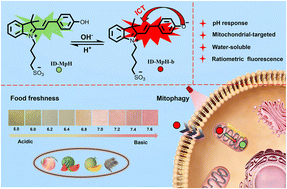
Mitochondria, as the primary energy-producing organelles, maintain pH levels that are intimately associated with cellular viability and disease states. Therefore, precisely tracking subtle pH changes within mitochondria is crucial for understanding numerous cellular physiological processes. Herein, a hemicyanine based ratiometric fluorescent probe ID-MpH is reported, constructed by integrating an indole fluorophore with a pH-responsive phenol moiety. ID-MpH showed excellent water solubility and biocompatibility due to the introduction of a sulfobutyl group. Additionally, a key feature of ID-MpH is its dual-emission upon single excitation wavelength, which enables self-calibrating ratiometric pH measurements. The amphipathic cation nature of ID-MpH enables its selective enrichment in the mitochondrial inner membrane, thereby conferring the capacity to monitor mitochondrial pH fluctuations in living cells in real time and to further successfully monitor the mitophagy process induced by starvation and drugs. Meanwhile, ID-MpH-based test strips can be used as a portable detection tool to monitor pH values in fresh fruit juices as well as pH changes during shrimp spoilage. In summary, ID-MpH not only enables precise tracking of mitochondrial pH changes in living cells but also allows visual monitoring of food freshness, demonstrating its application potential in the fields of cell biology and food quality control.
- This article is part of the themed collection: Analyst HOT Articles 2026
 Please wait while we load your content...


