


 PLATFORM UPDATE:


Catalytic effect of conductive dyes for improved analytical performance of an electrochemical sensor for piperine determination in black pepper

Abstract
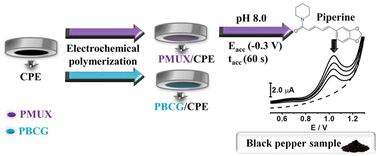
The electrocatalytic properties of anionic dye-based sensors were demonstrated via their strong influence on the oxidation signal of piperine (PIP), a widely used alkaloid usually found in food and pharmaceutical samples. The purpose of this study was to improve recent advancements in the design and sensing ability of modified carbon paste electrodes (CPEs) prepared by electropolymerization of dyes for PIP determination. The important variables were the choice of dye for electropolymerization and polymer dye film thickness when incorporated onto the CPE surface, which were evaluated using cyclic voltammetry (CV) and electrochemical impedance spectroscopy (EIS). The performances of the two anionic dye-based sensors, poly(murexide)-modified CPE (PMUX/CPE) and poly(bromocresol green)-modified CPE (PBCG/CPE), were compared, and PMUX/CPE proved to show the most favorable electrocatalytic behavior. CV studies revealed that PIP undergoes an irreversible electrooxidation at the PMUX/CPE and exhibits an adsorptive behavior. Consequently, the sensitivity of the PMUX/CPE was greatly improved when polarized at −0.3 V for 60 s due to the higher accumulation ability of PIP at pH 8.0, as determined during the optimization of the square wave adsorptive stripping voltammetry (SW-AdSV) method. The achieved analytical response of PIP was found to be linear in the range of 0.067–3.47 µmol L−1 PIP, and the limit of detection was 21 nmol L−1 PIP. Ultimately, the PIP concentration in a black pepper sample was determined using the designed PMUX/CPE and the SW-AdSV method, which demonstrated great sensitivity, selectivity, and reproducibility. The obtained results were confirmed using a comparative spectrophotometric method.
 Please wait while we load your content...


