


Selective fluorescence detection of hydrogen sulfide in the brain microdialysate using an ESIPT-activated probe
 *b
and
Hui
Gu
*a
*b
and
Hui
Gu
*a
Abstract
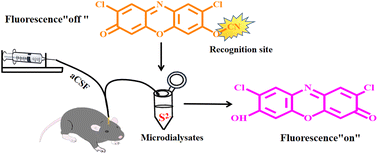
Hydrogen sulfide (H2S) has emerged as a key neuromodulator in the central nervous system, yet its accurate quantification in the brain system remains challenging due to strong interference from endogenous thiols and other sulfur-containing species. Here, we report an excited-state intramolecular proton transfer (ESIPT)-based fluorescent probe designed for selective and sensitive detection of H2S. The probe incorporates a cyano-substituted carbamate unit that suppresses ESIPT, producing a distinct turn-on fluorescence response at 594 nm upon H2S-induced cleavage. The probe exhibits a strong linear fluorescence enhancement in the range of 2–50 μM (R2 = 0.997) with a low detection limit of 0.206 μM. The reaction product shows excellent fluorescence stability over several hours, minimal sensitivity to pH variations under physiological conditions, and outstanding selectivity against biologically abundant ions, reactive species, thiols, and amino acids. Importantly, the probe enabled reliable quantification of endogenous H2S in hippocampal microdialysates from normal and Parkinson's disease (PD) mice. These findings demonstrate the potential of the probe as a robust analytical tool for studying H2S dynamics in neurochemical processes.
 Please wait while we load your content...


