



A portable electrochemical platform for biorecognition-free detection of ochratoxin A and ascorbic acid for food safety and quality monitoring

Abstract
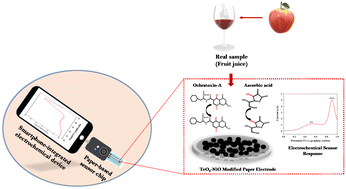
Even low concentrations of mycotoxins in food and agricultural products can be extremely hazardous for the health of both humans and livestock animals. Ascorbic acid, commonly referred to as vitamin C, can potentially reduce the levels of reactive oxygen species (ROS) generated by mycotoxin exposure. For the first time, this study reports the development of a biorecognition molecule-free electrochemical sensor that can simultaneously detect both the mycotoxin ochratoxin-A (OTA) and ascorbic acid (AA). Here, we present a paper-based electrode modified with tellurium oxide (TeO2) sheets and nickel oxide (NiO) nanoparticles that enhance both the effective surface area and the electron transport rate through the transducer surface. NiO nanoparticles facilitate electrochemical oxidation, whereas TeO2 enhances current tunnelling across the electrode surface. This is the first report on the non-enzymatic electrochemical sensing application of a tellurium oxide-nickel oxide conjugate. The sensor presents excellent selectivity and detection limits of 0.39 µg mL−1 for OTA and 9.17 µg mL−1 for AA over the linear ranges of 0.5–50 µg mL−1 and 5–500 µg mL−1, respectively. It renders excellent storage stability for up to 30 days and surface reproducibility with a relative standard deviation of 2.20%. High recovery rates in spiked food samples and no significant difference (P < 0.05) from real samples highlight its practical applicability. This study presents the advances in smartphone-integrated, paper-based, low-cost electrochemical sensors for the rapid monitoring of the quality of food products.
 Please wait while we load your content...


