


 PLATFORM UPDATE:

A bird nest-inspired and fully biomass coating with an interpenetrating fibrous network for thermal insulation and universal fire retardancy

Abstract
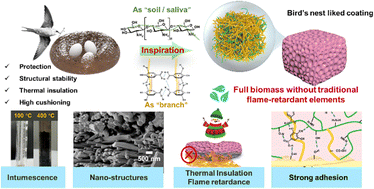
Flame-retardant coatings provide effective fire protection for various substrates, yet developing eco-friendly alternatives that combine strong adhesion, high-efficiency flame retardancy, and excellent thermal insulation remains a formidable challenge. Inspired by the nesting behavior of birds, a fully biomass-based fire-retardant coating without traditional flame-retardant elements was constructed through a green multiple-groups synergy strategy for “one stone for multiple birds” that concurrently incorporates nanostructuring, strong adhesion, thermal insulation, and universal flame retardancy. In this design, gallic acid (GA) self-assembles into nanofibrous-like supramolecular aggregates through π–π stacking, mimicking structural “twigs”. Meanwhile, chitosan acts as a cohesive binder, replicating the adhesive function of “saliva”. The resulting coating exhibits a bird nest-like interpenetrating structure with nanopores (<250 nm), which reduces the thermal conductivity of rigid polyurethane foam (RPUF) to 24.85 mW (m K)−1 from 28.57 mW (m K)−1. The synergy of decarboxylation/carbonization and radical scavenging imparts self-intumescent barrier properties and universal flame retardancy to diverse materials (fabric, RPUF, paper, wood), yielding a limiting oxygen index of 25–30%, and smoke and toxic gas suppression. This work presents a biomimetic strategy for sustainable, high-performance flame-retardant coatings with broad applicability.
 Please wait while we load your content...


