


The main component of polysaccharides from Hippophae rhamnoides L. improves HFD-induced neuronal damage by regulating tryptophan synthesis and metabolism
 *a
*a
Abstract
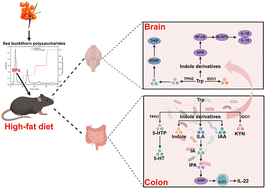
Excessive neuroinflammation can lead to neuronal damage, resulting in cognitive impairment and an increased risk of neurodegenerative diseases. This research aimed to examine the impact and underlying mechanisms of SPa, the main component of polysaccharides from Hippophae rhamnoides L., on neuronal damage induced by a high-fat diet (HFD) in mice. Initially, SPa significantly enriched the microbial communities associated with tryptophan synthesis and metabolism, such as Pseudoflavonifractor, Muribaculum, and Oscillibacter. Specifically, SPa restored the decrease of 5-HT and indole derivatives and the increase of KYN, and promoted the production of IL-22 by activating the indole derivative ligand AHR to alleviate HFD-induced intestinal inflammation and barrier damage. At the same time, SPa effectively alleviated HFD-induced behavioral impairments by alleviating neuroinflammation via the AHR–NF-κB–NLRP3/Caspase-1–IL-1β/IL-18 signaling pathway and improving neuronal damage via the BDNF/TrkB pathway. Therefore, we conclude that SPa can ameliorate HFD-induced neuroinflammation and neuronal damage via the gut microbiota–tryptophan metabolism–AHR axis.
 Please wait while we load your content...


