


 PLATFORM UPDATE:


Addressing the fundamental issues in Ni-rich cathodes: degradation mechanisms and mitigation strategies

Abstract
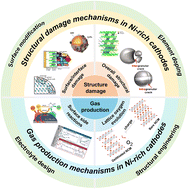
The rapid growth of electric vehicles (EVs) is driving an urgent demand for lithium-ion batteries (LIBs) with higher specific energy, longer life, and uncompromised safety. Ni-rich layered oxides (LiNixCoyMn(1−x−y)O2, x ≥ 0.8) have emerged as leading cathode materials for next-generation LIBs, owing to their high capacity and energy density. Further increasing Ni content is essential for improved performance and cost reduction. However, it also introduces new obstacles, necessitating thoughtful design of cathode composition, morphology, and microstructure, as well as the development of electrolyte formulations. In this review, we discuss the multiple failure mechanisms of Ni-rich cathodes in terms of two major aspects: structural degradation and gas release. We elucidate the key factors contributing to chemical, crystallographic, and microstructural degradation in Ni-rich cathodes, and summarize the various origins of gas evolution associated with these materials. Another key theme of this review is the modification of Ni-rich cathodes to address the practical hurdles that limit their use in long-range and high-safety EVs. Accordingly, we present a comprehensive overview of the latest Ni-rich cathode modification strategies for next-generation EV platforms.
- This article is part of the themed collection: Energy & Environmental Science 2026 Review Articles
 Please wait while we load your content...


