


Electrochemical reconstruction of CuMoO4 into CuO nanosheets for efficient electro-oxidation of 5-hydroxymethylfurfural
Abstract
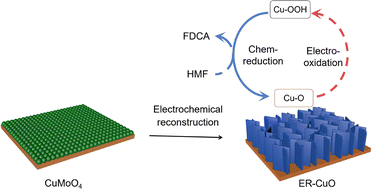
The development of efficient electrocatalysts for the oxidation of 5-hydroxymethylfurfural (HMF) to 2,5-furandicarboxylic acid (FDCA) is crucial for sustainable biomass valorization. Herein, CuMoO4 was synthesized by using a novel method via anodic oxidation of copper foam in Na2MoO4 solution. Then the CuMoO4 precursor was electrochemically reconstructed into a CuO catalyst (ER-CuO) via molybdate ion leaching. The ER-CuO exhibits a nanosheet morphology with abundant active sites, facilitating rapid charge transfer and enhanced electrocatalytic activity for the HMF oxidation reaction (HMFOR). ER-CuO requires only 1.43 V to achieve 50 mA cm−2, significantly lower than that of CuO. At a potential of 1.55V, ER-CuO achieves a high FDCA yield of 97.5% with a faradaic efficiency (FE) of 98.3%, along with remarkable stability over 10 cycles. The electrochemical analysis demonstrated that the HMFOR process occurs via an indirect oxidation mechanism mediated by the Cu2+/Cu3+ redox couple. Moreover, the ER-CuO exhibits abundant oxygen vacancies, which facilitate the generation of Cu3+ active species, thus contributing to improved HMFOR activity. This work provides a rational strategy for designing high-performance electrocatalysts for the HMFOR through electrochemical reconstruction.
 Please wait while we load your content...


