


 PLATFORM UPDATE:

Tissue and plasma proteomics for early stage cancer detection

Abstract
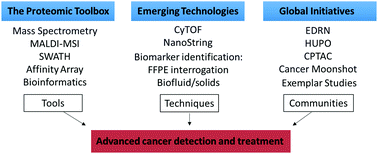
The pursuit of novel and effective biomarkers is essential in the struggle against cancer, which is a leading cause of mortality worldwide. Biomarkers can be used as specific diagnostic tools, prognostic predictors, markers of the development of therapeutic resistance or even as therapeutic targets themselves. Through the application of sensitive and specific proteomic techniques, oncoproteomics investigates the proteins associated with cancer processes, to better understand their biological function/s and their associated pathways during tumorigenesis. Such studies seek to identify both potential biomarkers and drug targets in order to improve patient survival and quality of life whilst reducing the global health budget. Tissue and plasma are the most commonly utilised biological samples for such studies as they are readily available, non-invasive and generally acceptable. Here, we outline the relative advantages and disadvantages of the most frequently used techniques for cancer diagnosis, prognosis, treatment and surveillance, concentrating on the latest advances and application of tissue and plasma proteomics for novel cancer biomarker discovery and disease surveillance.
 Please wait while we load your content...