



Advanced functional MOFs for CO2 capture and separation

Abstract
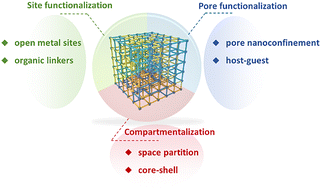
The efficient capture and separation of carbon dioxide (CO2) represents a pivotal strategy for mitigating climate change and achieving a sustainable carbon economy. Metal–organic frameworks (MOFs) have emerged as highly promising adsorbents for CO2 separation processes, owing to their exceptional structural and chemical tunability. This review provides a comprehensive survey of the decisive impact of MOF characteristics on CO2 adsorption and separation, by analyzing the interplay of structural (pore size and geometry) and chemical (surface functionality and open metal sites) properties in processes such as post-combustion CO2 capture (CO2/N2 separation), natural gas purification (CO2/CH4 separation), and direct air capture. Special emphasis is placed on molecular-level design strategies to address key challenges in complex practical environments, including the presence of water vapor, competitive adsorption from other gases, and the effective capture of CO2 at low concentrations. Finally, we critically assess the ongoing challenges regarding chemical stability, scalable production, and economic viability, offering a perspective on the future development of next-generation MOFs for real-world carbon capture applications.
- This article is part of the themed collection: Emerging Trends in Advanced Functional Porous Materials
 Please wait while we load your content...


