


Modulating spin states in dual active sites of CoFe electrocatalysts for energy harvesting applications
 ab
and
J.
Archana
*a
ab
and
J.
Archana
*a
Abstract
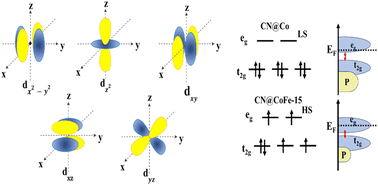
Spin state modulated electrocatalysts have emerged as an effective approach to replace the platinum (Pt) electrode in energy harvesting applications. Hence, this study demonstrates the excellent electrocatalytic water splitting and dye-sensitized solar cell (DSSC) performance of an N-doped carbon-encapsulated CoFe bimetallic structure (CN@CoFe) as an electrode material, attributed to the high spin state of the bimetallic composition. Initially, the electrocatalyst was synthesized via a two-step process, which involves (i) the hydrothermal synthesis of Fe-loaded ZIF-67 and (ii) subsequent annealing at 800 °C under an inert atmosphere. The resulting CN@CoFe-15, with an optimal Fe loading of 15%, exhibited remarkable electrocatalytic activity in both alkaline and iodide-based electrolyte media. Notably, CN@CoFe-15 achieved efficient overall water splitting at a cell voltage of 1.51 V (at 10 mA cm−2) and also demonstrated a superior performance as a counter electrode in DSSCs, delivering a power conversion efficiency of 8.06%, reasonably larger than that of Pt (6.69%). The large g-factor (of 2.73) obtained in electron paramagnetic resonance analysis confirmed the presence of high-spin states. The crystal field splitting theory explains the role of the Co/Fe ratio in inducing a higher number of unpaired electrons, which produce high-spin states. These results highlight the importance of introducing high-spin in electrocatalysts for designing cost-effective, Pt-free electrocatalysts for sustainable energy technologies.
 Please wait while we load your content...


