


Conformational locking through intramolecular F⋯H interactions in dimerized M-series acceptors boosts efficiency and stability of organic solar cells
 *a
and
Qingdong
Zheng
*b
*a
and
Qingdong
Zheng
*b
Abstract
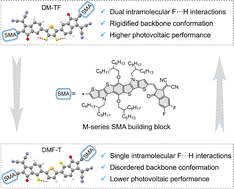
Dimerized M-series small-molecule acceptors feature highly planar conjugated backbones, enabling ordered stacking and enhanced morphological stability. However, rotatable bonds introduced during dimerization often induce conformational disorder, undermining efficient charge generation and transport. Here, we report two rationally designed M-series dimers, DM-TF and DMF-T, which both incorporate strategic intramolecular fluorine⋯hydrogen interactions to enhance conformational rigidity. DM-TF, which features fluorinated thiophene π-bridges interacting with hydrogen atoms on the central end groups, exhibits superior conformational rigidity, reduced energetic disorder, improved crystallinity, and enhanced charge transport properties compared to DMF-T. Consequently, DM-TF-based organic solar cells (OSCs) deliver a power conversion efficiency of 18.40%, surpassing the DMF-T-based devices (17.77%). Additionally, they demonstrate exceptional thermal stability, exhibiting negligible performance loss after being heated at 80 °C for 2000 hours. Furthermore, incorporating DM-TF as a third component into PM6:M36 blends boosts the efficiency of the resulting devices to 19.16%, which is the highest reported value among all non-Y-series acceptors. These results underscore the effectiveness of engineering intramolecular non-covalent interactions in the molecular design of acceptor materials and highlight the great potential of dimerized M-series acceptors for high-efficiency and stable OSCs.
 Please wait while we load your content...


