


 PLATFORM UPDATE:


Artificial intelligence-powered nanomedicine

Abstract
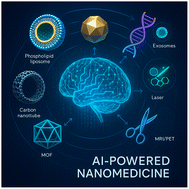
The escalating global burden of diseases—including cancer, neurodegenerative, and cardiovascular disorders—poses severe threats to human health and social development. The inherent limitations of conventional diagnostic, imaging, and therapeutic modalities have driven the rapid evolution of nanomedicine, particularly nanotheranostics, which integrates diagnostic and therapeutic functionalities within a single nanoplatform for enhanced precision and safety. Despite remarkable advances in nanotechnology and materials science over recent decades, challenges such as the biological complexity of living systems, incomplete understanding of nano–bio interactions, inefficiencies in nanoparticle synthesis, and limited clinical translation continue to hinder progress. The recent convergence of nanomedicine with artificial intelligence (AI) and computational sciences has opened transformative opportunities to overcome these obstacles. AI-empowered algorithms, including machine learning, deep learning, and generative models, are increasingly being applied to optimize nanoparticle design and synthesis, predict nano–bio interactions, and improve diagnostic and therapeutic efficacy. These approaches not only accelerate materials discovery but also enable data-driven, adaptive nanotheranostic systems capable of autonomous optimization across disease contexts. This review systematically summarizes the current landscape of AI-powered nanomedicine, highlighting advances in nanoparticle design, synthesis, and the development of AI-guided diagnostic and therapeutic nanoplatforms. It further discusses applications in bioimaging, targeted therapy, and clinical translation, while identifying existing challenges and future perspectives in establishing next-generation AI-empowered nanotheranostics. Ultimately, the integration of artificial intelligence and nanotechnology is expected to revolutionize precision medicine by bridging the gap between fundamental nanoscience and clinical implementation, paving the way toward intelligent, personalized healthcare.
- This article is part of the themed collection: 2025 Pioneering Investigators
 Please wait while we load your content...


