


Antibacterial MnS/Co-SNC cathode catalysts for high-performance microbial fuel cells

Abstract
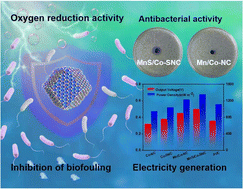
The practical application of microbial fuel cells (MFCs) is often hindered by sluggish oxygen reduction reaction (ORR) kinetics and biofouling at the cathode. Herein, we developed a bifunctional MnS/Co co-anchored N-doped carbon catalyst (MnS/Co-SNC) derived from ZIF-67. This catalyst was designed to simultaneously tackle both problems by integrating enhanced ORR activity with intrinsic antibacterial functionality. The incorporation of MnS generates heterogeneous MnS/Co interfaces, inducing electron redistribution and optimizing oxygen adsorption, while carbon nanotubes (CNTs) grown in situ facilitate rapid electron transfer. Benefiting from these synergies, MnS/Co-SNC exhibits an onset potential of 0.92 V and a half-wave potential of 0.88 V in alkaline media, surpassing commercial Pt/C. More importantly, the sulfur species provide potent antibacterial activity, effectively suppressing biofilm formation and preserving catalytic sites. When applied as an air-cathode in single-chamber MFCs, MnS/Co-SNC delivers a maximum power density of 1400 mW m−2 and maintains a stable voltage output over 120 h, outperforming state-of-the-art non-precious metal catalysts. This work presents a rational strategy for designing multifunctional electrocatalysts that simultaneously address ORR kinetics and biofouling, advancing the practical deployment of MFCs for sustainable energy generation.
 Please wait while we load your content...


