


Diagnostic performance of thioflavin T in one-step RT-PCR for detection of a viral RNA

Abstract
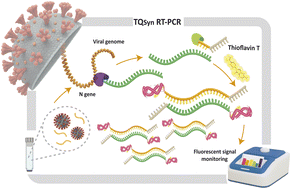
In recent years, thioflavin T (ThT) has been applied as an intercalating fluorescence probe in the development of biosensors. One approach is based on monitoring the fluorescent signal of ThT upon binding to a G-quadruplex (GQ). GQ is a structure that is formed from guanine-rich sequences. The sequences may be synthesized during isothermal or cyclic amplifications. The ThT-based fluorescent signal generation has been combined with various isothermal amplification methods. However, to the best of our knowledge, it has not yet been studied in combination with cyclic amplifications, i.e., polymerase chain reaction (PCR). PCR has benefits that has led to success in many commercial and FDA-approved diagnostic kits; however, the traditional qPCR methods that apply TaqMan technology suffer from challenges such as high price and dependence on sophisticated instruments. The current commercial qPCR kits are limited in their wider application by general public health authorities upon their price and availability. Thus, developing new amplification-based nucleic acid tests (NATs) was portrayed to be necessary to facilitate an improvement in public health. Here, we present a fluorimetric analysis of PCR products upon incorporating thioflavin T into the synthesized GQ as a new readout system for detecting a viral RNA. The PCR primers were designed with a reverse complementary sequence of a GQ. The system's efficiency was validated in one-pot, one-step reactions for detecting the presence of a model virus, i.e., SARS-CoV-2 genome in samples taken from individuals with various viral loads.
 Please wait while we load your content...


