


Synergistic modulation of electronic structure in PtCo intermetallic electrocatalysts via N,F-co-doped graphene for robust oxygen reduction reaction

Abstract
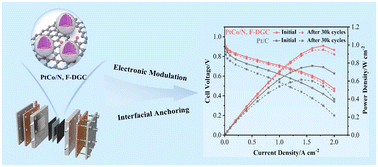
The widespread application of proton exchange membrane fuel cells (PEMFCs) faces difficulties due to sluggish kinetics in the oxygen reduction reaction (ORR), the high expense, and the limited durability of platinum (Pt)-based catalysts. This work introduces a highly efficient electrocatalyst that involves the attachment of ordered PtCo intermetallic nanoparticles (NPs) to a three-dimensional defective graphene support, which is co-doped with nitrogen and fluorine (PtCo/N,F-DGC). The support was synthesized via an innovative molten salt-assisted method that enables simultaneous heteroatom doping and porous structure formation. The resulting catalyst demonstrates exceptional performance in ORR with a mass activity (MA) of 1.02 A mgPt−1, which signifies a 10.2-fold improvement over conventional Pt/C, and it retains impressive stability, exhibiting merely a 2 mV loss in half-wave potential after 30k accelerated cycles. Calculations based on density functional theory (DFT) indicate that co-doping with N and F effectively decreases the Pt d-band center, which optimizes the adsorption of oxygen intermediates and lowers the energy barrier for the reaction. Membrane electrode assembly (MEA) tests confirm its remarkable performance in fuel cells, offering a practical method for creating advanced low-Pt electrocatalysts that demonstrate improved activity and durability.
 Please wait while we load your content...


