


 PLATFORM UPDATE:


An aqueous lithium polyacrylic acid binder enables sulfur distribution and high active material loading to enhance Li–S battery performance

Abstract
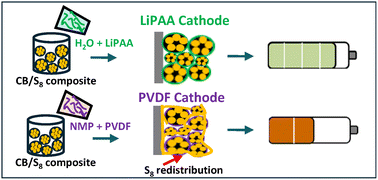
Lithium–sulfur (Li–S) batteries are considered next-generation batteries due to the multiple advantages of using cost-effective sulfur as a cathode material. The development of high-performance and sustainable Li–S battery cathodes demands high active material loading and replacement of traditionally used toxic solvents to dissolve binders in electrode fabrication. Herein, we demonstrate the application of lithium polyacrylic acid (LiPAA) as an aqueous binder to realize high active material loading in Li–S battery cathodes. This approach offers a safe and environmentally friendly alternative that enhances performance compared to the widely employed conventional polyvinylidene fluoride (PVDF) binder, which is processed with the toxic solvent N-methyl-2-pyrrolidone (NMP). Optical spectroscopy and microscopy analyses revealed sulfur dissolution in NMP solvent during electrode fabrication, resulting in non-uniform sulfur redistribution within the cathode. This structural inhomogeneity adversely affected electrode integrity and contributed to inadequate electrochemical performance of the battery, particularly under high C-rate conditions. In contrast, electrodes fabricated with the LiPAA binder did not show sulfur dissolution and offered better cyclability. Electrochemical impedance spectroscopy was used to investigate and understand the differences in the battery performance of the prepared electrodes. Our results underscore LiPAA as a viable, scalable, and environmentally friendly binder system for enhancing the performance and stability of Li–S batteries.
 Please wait while we load your content...


