


 PLATFORM UPDATE:


Engineering Al/Fe dual-doped nanoporous ZnO nanorods for efficient visible-light-driven photoelectrochemical hydrogen evolution

Abstract
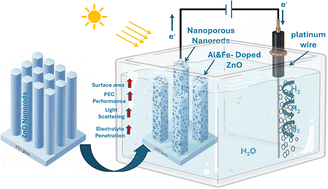
The transition toward sustainable energy systems has increased interest in solar driven photoelectrochemical hydrogen generation. Among available photoanodes, ZnO is attractive for its abundance and favourable charge transport properties, yet its performance remains restricted by poor visible light absorption and rapid charge recombination. Although doping and nanorod engineering have been widely explored, the combined use of Al/Fe dual doping with a nanoporous ZnO nanorod architecture remains underexplored. Here, we fabricate nanoporous ZnO nanorods modified through synergistic Al and Fe co-doping. Al3+ enhances carrier density and conductivity, while Fe3+ introduces beneficial sub-bandgap states and drives the formation of a highly nanoporous surface, expanding the electroactive area and improving charge separation. The resulting photoanodes exhibit significantly enhanced PEC hydrogen evolution performance compared to pristine ZnO, achieving a photocurrent density of 3 mA cm−2 at 1 V vs. RHE, reduced charge-transfer resistance, and long-term operational stability over 5 h under sacrificial Na2SO3 electrolyte conditions. Electrolyte-dependent tests further confirmed the strong influence of pH and sacrificial agents on PEC performance, and among electrolytes, Na2SO3 provides the best stability. Furthermore, the electrode demonstrates stable visible-light-driven hydrogen generation, producing 5.7 mL cm−2 of H2 over 5 hours.
 Please wait while we load your content...


