


 PLATFORM UPDATE:


Metastatic impact of perfluorooctanoic acid on liver cancer: insights from HepG2 cells and zebrafish xenograft models
 *b
*b
Abstract
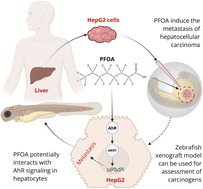
Widely used in consumer products for its water- and grease-resistant properties, perfluorooctanoic acid (PFOA), a legacy per- and polyfluoroalkyl substance (PFAS), has been increasingly implicated in liver carcinogenesis. Long-term or high-level PFAS exposures have been found to be associated with an increased incidence of several types of cancers, including liver, kidney, and breast cancers. Despite mounting evidence linking PFAS exposure to hepatotoxicity and cancer, experimental models that enable real-time visualization of PFOA-induced carcinogenicity remain limited. To address this gap, we aimed to develop a liver tumor xenograft model using zebrafish (Danio rerio) embryos for the investigation of the carcinogenic effects of PFOA on human liver cells. To create the xenograft model with zebrafish embryos, human hepatic HepG2 cells were labeled with living cell imaging dyes and engrafted into fish embryos at one day post-fertilization. The embryos were then exposed to PFOA at concentrations of 0.1, 1.0, and 10 ppm for 24–96 hours. The in vivo cell proliferation was confirmed by quantifying the expression levels of a HepG2 housekeeping gene, hypoxanthine-guanine phosphoribosyltransferase 1 (hprt1). The expression profiles of two metastasis markers, cdh1 and mmp9, suggested the induction of HepG2 cell metastasis by PFOA. The PFOA-triggered metastatic changes in HepG2 cells were also confirmed by the observation of cell migration inside the zebrafish embryos. Two polycyclic aromatic hydrocarbon (PAH) chemicals, anthracene and naphthalene (0.1–1.0 ppm), were used as both of them were reported to damage hepatic cells through activating the aryl hydrocarbon receptor (AhR) pathway. Although both PAH compounds altered the expression patterns of cdh1 and mmp9 in HepG2 cells, their capabilities to enhance the HepG2 proliferation in vivo were less significant compared to PFOA. The results demonstrated that prolonged chemical exposure to PFOA can promote HepG2 cell survival, proliferation, and metastasis in vivo. This zebrafish xenograft model provides a dependable and robust platform for mechanistic toxicology studies and is a mid-to high-throughput screening tool for environmental carcinogens and anti-cancer drug selection.
- This article is part of the themed collection: HOT articles from Environmental Science: Advances
 Please wait while we load your content...


