


 PLATFORM UPDATE:


Spatial and temporal variations of ambient PM2.5, NO2, and O3 in Kigali: evidence and policy implications from a multi-year, citywide monitoring network

Abstract
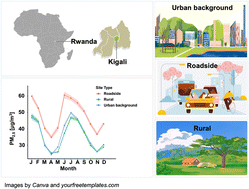
Air pollution is increasingly concerning for the environment and health in Africa, yet high-resolution, dependable data are limited. This study provides a comprehensive assessment of air quality in Kigali city, Rwanda's capital, using real-time PM2.5, NO2, and O3 measurements from 11 stations across three districts (Gasabo, Kicukiro, and Nyarugenge) spanning 2021 to 2024. All data were collected using a low-cost sensor (Real-time Affordable Multi-Pollutant (RAMP)) and validated with data from a reference-grade Beta Attenuation Mass Monitor (BAM). The results show that PM2.5 levels regularly exceed WHO guidelines across all seasons, with annual averages ranging from 33.6 to 46.3 µg m−3 and peak episodes exceeding 200 µg m−3, especially during dry months. NO2 levels ranged from 18.6 to 22.9 µg m−3 annually, with the peak hourly concentration reaching 173 µg m−3 at roadside locations. O3 displayed significant seasonal changes, with 8 hour maximums reaching nearly 58 ppb. PM2.5 and O3 concentrations at the urban roadside sites were significantly higher than those at the urban background and rural sites. This is the first comprehensive long-term citywide air quality study in Rwanda, providing an essential baseline for informed policymaking and regional comparisons across sub-Saharan Africa. Our findings highlight the need to expand the deployment of low-cost sensor networks in vulnerable urban neighbourhoods to understand local-scale air pollution episodes and rapidly inform local interventions.
 Please wait while we load your content...


