


 PLATFORM UPDATE:


Human health and exposure to microplastics and nanoplastics: a cross-sectional survey on public risk perception in Italian adults
 *a
Massimo
Aloisi
a
and
*a
Massimo
Aloisi
a
and
Abstract
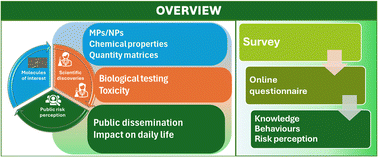
Microplastics (MPs) and nanoplastics (NPs) are emerging as significant environmental hazards in the contemporary era for both plants and animals. Additionally, they have been found to accumulate in the human body, underlying the need to understand their health impact and to assess public awareness and risk perception. In an Italian sample, a cross-sectional survey was conducted using a river sampling enrolment and an online questionnaire filled by 242 participants at the national level. Respondents showed substantial concern about potential health effects, particularly towards carcinogenic risks, despite the lack of robust scientific evidence. Overall, 65% have heard of MPs and NPs, but still significant mistakes emerged in their definitions and in determining toxicological outcomes. 78% of participants perceived MPs and NPs as threatening yet poorly understood hazards. Behavioural intentions, such as reducing consumption of fish or using toothpaste if contaminated, correlated significantly with increased actual knowledge. Media sources, associated with socio-demographic and risk perception variables, seemed to influence participants' actual knowledge (e.g., TV, radio, or newspapers as the frequent source of information vs. wrong beliefs about carcinogenicity). Despite some important limitations, the findings suggest the urgent need for targeted communication strategies to bridge the evidence-to-practice gap, correct misinformation, and promote proactive behaviours and good practices at the public level by reinforcing environmental health literacy among citizens.
 Please wait while we load your content...


