


 PLATFORM UPDATE:


Long-term nitrogen deposition disrupts carbon cycling and enhances plant-derived carbon sequestration in a temperate forest

Abstract
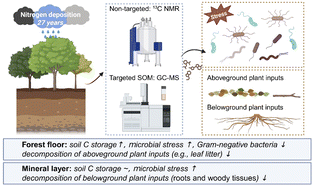
Nitrogen (N) deposition alters carbon (C) dynamics in forests, but its long-term impact on soil C biogeochemistry remains unelucidated at the molecular-level. We collected soils after 27 consecutive years of N additions in a temperate forest and examined soil chemistry using molecular soil organic matter (SOM) compositional analysis to unravel mechanisms and impacts on soil biogeochemistry. N-addition increased soil C storage in the forest floor, where microbial stress increased and decomposition was suppressed, causing accumulation of aboveground plant inputs such as leaf litter and a shift toward less stable SOM. In the mineral soil, C storage did not change significantly, but decomposition of root and woody materials was reduced, and microbes exhibited stress. After nearly three decades, microbial stress persisted with a community shift toward fewer Gram-negative bacteria, which prefer labile C like cellulose. The rise in more labile C forms further supported accumulation of microbially preferred substrates. Overall, chronic N deposition thus impairs microbial decomposition and alters SOM composition, reducing C turnover and leading to accumulation of less persistent C forms that may be vulnerable to loss upon forest disturbance or environmental change. These findings emphasize the importance of integrating microbial and chemical composition in predicting long-term N deposition impacts on forest soil C sequestration and demonstrate the severe impacts on biogeochemical processes in forests.
 Please wait while we load your content...


