


 PLATFORM UPDATE:


Acidogenic valorization of agricultural residues and industrial waste streams: substrate composition regulating the microbial community and metabolites

Abstract
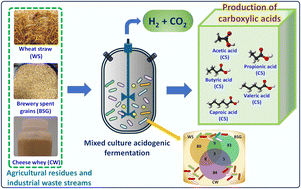
The global waste crisis is a significant concern driven by urbanization and economic expansion. Untreated waste poses major environmental, economic, and societal challenges, especially affecting agriculture and industry. Addressing this crisis necessitates innovative waste management strategies and sustainable practices to mitigate the impending waste burden on ecosystems and societies worldwide. Recent advancements in biofuels and biochemicals intensified research into the conversion of biogenic waste into bio-carboxylic acid/volatile fatty acids (VFAs), driven by the dual imperatives of sustainable waste management and renewable resource development. This study presents a comparative analysis of three waste streams: cheese whey from the cheese-making industry, lignocellulosic brewery spent grains (BSG), and agricultural by-products like wheat straw (WS) assessing their efficacy in carboxylic acid production by mixed culture fermentation. Each substrate produced a diverse array of carboxylic acids, including acetic, propionic, butyric, valeric, iso-valeric, and caproic acids exhibiting unique fermentation efficiencies in carboxylic acid production. The experimental results reveal distinct fermentation efficiencies, the highest concentration of short-chain carboxylic acids (SCCA) production of 11.84 gCOD per L from CW, alongside a medium-chain carboxylic acid (MCCA) production of 3.95 gCOD per L. Notably, despite the lignocellulosic composition of the substrates, both BSG and WS demonstrated substantial and competitive yields of SCCA and MCCA. Specifically, BSG produced 10.68 gCOD per L of SCCA and 3.54 gCOD per L of MCCA, while WS yielded 11.51 gCOD per L of SCCA and 3.84 gCOD per L of MCCA. These findings highlight the viability of lignocellulosic substrates for carboxylic acid production, suggesting significant opportunities for enhancing bioprocessing strategies in biochemical and industrial applications. Taxonomic analysis of microbial communities showed a significant predominance of Firmicutes, Bacteroidota, and Actinobacteriota. The Clostridiaceae family exhibited dominance across all reactors, with respective abundances of 82.72%, 27.67%, and 61.29%. The BSG uniquely showcased an enrichment of Lactobacillaceae (23.86%), Ruminococcaceae (7.72%), and Prevotellaceae (3.24%). Key genera contributing to carboxylic acid production included Clostridium sensu stricto 1, Romboutsia, and Enterococcus. This diversity highlights the influence of substrate composition on microbial community structure, highlighting the intricate relationships between substrate nature and microbial metabolites suggesting that strategic substrate selection could optimize fermentation efficiency and enhance product yield.
 Please wait while we load your content...


