


 PLATFORM UPDATE:


Augmenting manure solids as scaffolding for phosphorus release/retention via in situ iron-phosphate complexes procured with Fe-biochar + FeCl3 treatment

Abstract
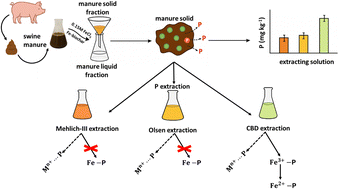
Swine manure mismanagement can lead to several environmental issues, such as eutrophication and gaseous emissions. This study examines swine manure solid separation using a coagulant (0.15 M FeCl3) with unmodified and iron-modified corn stover biochar, and evaluates phosphorus (P) recovery efficiency from the separated solids using Mehlich-III, Olsen, and citrate-bicarbonate-dithionite (CBD) extractants. Adding a combination of 0.15 M FeCl3 and iron-modified biochar to manure effectively separated 100% P from the solution into the solid fraction by forming a strong iron phosphate (P−) complex using inner-sphere and cation-bridging mechanisms. The spontaneity and feasibility of the process were assessed through a change in the Gibbs' free energy (ΔG0), which was determined to be −23.3 kJ mol−1. We evaluated the nutrient stability of the manure solid fraction using conductometric and pH metric analyses, and Mehlich-III solution in the presence of a dispersive medium (0.15 M NaCl), and the manure was characterized using Raman and FTIR spectra. Furthermore, the release pattern of macronutrients was determined by the degree of dissociation under the influence of different extractants. It is worth mentioning that CBD successfully extracted P (7477 mg kg−1) from cation-bridged P− and iron-bound P−. This study presents an effective technique to separate P into solid fractions and offers a promising strategy for P recovery.
 Please wait while we load your content...


