


 PLATFORM UPDATE:


A dragon fruit peel-derived heterogeneous catalyst for Michael addition reactions and methanolysis of PET waste: a green and dual-functional approach

Abstract
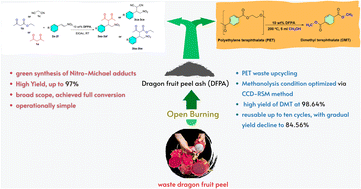
In this study, we investigate the innovative use of a low-cost dragon fruit peel-derived heterogeneous catalyst for two environmentally significant reactions: the Michael addition reactions and the methanolysis of PET waste. For the Michael addition reaction, optimal conditions were found to be 10 wt% DFPA catalyst with 0.5 mL ethyl acetate, achieving maximum conversion within 15 min. We systematically studied this transformation using three Michael donors – acetylacetone, ethyl acetoacetate, and malononitrile – and six β-nitrostyrene derivatives as acceptors. In the methanolysis of PET waste, central composite design-based response surface methodology (RSM) was employed for optimization. Statistical analysis confirmed the significance of the design experiment, with optimized conditions of 36.29 mg catalyst loading, 0.97 h reaction time, 5.7 mL methanol, and 204 °C reaction temperature, yielding 98.64% dimethyl terephthalate. The catalyst demonstrated good to excellent reusability, maintaining an 84.56% DMT yield even after the tenth cycle. Michael products were all confirmed using NMR analysis, and HPLC, FT-IR, and NMR analyses were employed for DMT confirmation.
 Please wait while we load your content...


