


 PLATFORM UPDATE:


Assessing the impacts of feed and species composition on greenhouse gas emission from freshwater aquaculture systems in Bangladesh

Abstract
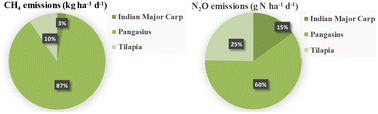
Bangladesh, a major global aquaculture producer, is potentially a notable source of greenhouse gas (GHG) emissions from aquaculture, but no measured data have yet been reported. This study investigates hydrochemistry, dissolved GHG concentrations in water and GHG (CO2, CH4, and N2O) emissions from four prevalent freshwater aquaculture systems in Mymensingh, Bangladesh, focusing on Indian major carps (IMCs), Pangasius catfish (PG), Climbing perch (CP) and Tilapia (T), along with the feed loads. Semi-structured interviews with farm managers yielded key feed input parameters, including consumption rates, protein levels, and feed conversion ratios. Dissolved GHG concentrations and atmospheric emissions were measured during 2023 to 2024 (spanning from the dry winter to the pre-monsoon season, with biweekly sampling) using the headspace extraction for dissolved gases and a 40 × 40 × 50 cm3 acrylic floating chamber for surface fluxes, with gas chromatography. The results revealed that PG systems exhibited significantly higher CH4, N2O and CO2 emissions by 89–96, 59–75 and 66–78% than IMC and T systems, likely due to intensive sinking-feed use causing low dissolved oxygen, high electrical conductivity and mineral nitrogen, thereby promoting anaerobic conditions and enhanced methanogenesis and denitrification. In contrast, the IMC and T systems, utilizing more efficient floating feeds, showed comparatively lower emissions. The dissolved gas concentration analysis further complemented the surface gas emissions data, offering a holistic understanding of emissions from aquaculture ponds. The results suggest that optimizing feed composition and management can substantially reduce the aquaculture sector's impacts on climate change. By providing a detailed understanding of the GHG emissions from different aquaculture systems, this research contributes valuable insights for policymakers, industry stakeholders, and environmental scientists.
 Please wait while we load your content...


