


 PLATFORM UPDATE:


Urban PM2.5 pollution in Kazakhstan: health burden and economic costs

Abstract
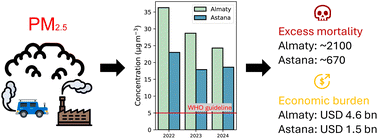
Ambient particulate matter (PM2.5) exposure constitutes the leading global risk factor for non-communicable diseases. This study assesses the healthcare and economic burdens of air pollution in Kazakhstan's two major urban cities, Almaty and Astana. During 2022–2024, PM2.5-attributable excess mortality reached 2108 ± 144 deaths in Almaty and 676 ± 41 deaths in Astana annually. The results of this research suggest that compliance with the World Health Organization (WHO) air quality guideline for annual average PM2.5 concentrations (5 µg m−3) can potentially prevent 1196–1698 and 446–497 deaths in Almaty and Astana, respectively. Economic losses from PM2.5-related mortality were estimated at USD 2.8–4.6 billion for Almaty and USD 0.9–1.5 billion for Astana per year throughout the study period. Achieving the WHO-recommended annual PM2.5 limit of 5 µg m−3 by 2022 might yield annual economic benefits of USD 2941–3685 million in Almaty and USD 863–1043 million in Astana. These findings highlight the urgency of comprehensive, coordinated air quality management strategies, with a particular emphasis on fossil fuel phase-out initiatives.
 Please wait while we load your content...


