


 PLATFORM UPDATE:


Life cycle inventory data for critical mineral mining: recommendations and new U.S. data compendium
 a
Jennifer B.
Dunn
*ac
a
Jennifer B.
Dunn
*ac
Abstract
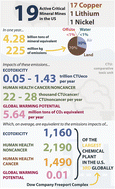
Production and pollution data and information for United States critical mineral mines are heavily fragmented across numerous databases and sources, such as government emissions reports and company documents. These disintegrated data complicate fair and consistent analyses and communities' understanding of mine operations and impacts. For 19 active critical mineral mines in the United States, we aggregated location, production, and emissions data and developed an interactive data compendium map and data set. We calculated the ecotoxicity, human health cancer, and human health non-cancer life-cycle impacts of the emissions from these mines. Further, we analyzed the proximity of these mines to disadvantaged community tracts identified by the Justice40 initiative and found all mines are within 29 miles of a disadvantaged tract. We defined a methodology to develop probability distribution functions for mining pollution data to support robust mining life cycle inventory data. Finally, we discussed next steps to expand the data compendium to additional critical minerals and other countries like Australia and Chile. Reducing fragmentation in mine emissions data is important because aggregated or old data masks unique features of individual mines including geology, hydrology, and geography. Furthermore, given changes in time in ore grade and mining technology, recent data best capture the contemporary impacts of an individual mine.
- This article is part of the themed collection: Battery Material Mining and Recycling: Environmental Impacts, Challenges and Green Solutions
 Please wait while we load your content...


