


 PLATFORM UPDATE:


Synergistic enhancement of nonlinear optical limiting via in situ confined carbon nanodots in metal–porphyrinic framework thin films
 b
De-Jing
Li
*abc
b
De-Jing
Li
*abc
Abstract
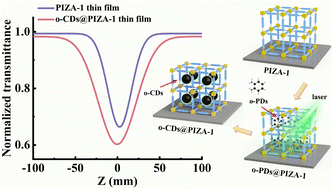
Electron donor–acceptor (D–A) complexes are emerging as promising candidates for the development of effective nonlinear optical limiting (OL) materials but their preparation still remains challenging. Herein, we report an electron D–A OL device based on a metal–porphyrinic framework thin film loaded with carbon nanodots (CDs). The composite film was prepared by impregnating a porous PIZA-1 MOF film with an o-phenylenediamine precursor and subsequent in situ conversion of the precursor into CDs via laser irradiation. The resulting o-CDs@PIZA-1 thin film exhibits superior OL performance with a lower OL threshold of 2.21 J cm−2 and a higher nonlinear absorption coefficient of 3.1 × 10⁻⁶ m W−1 compared to the pristine PIZA-1 thin film. This enhancement is mainly attributed to energy transfer/photoinduced electron transfer (ET/PET) of the porphyrin group and the confined CDs. Density functional theory (DFT) calculation reveals significant electronic interactions between the PIZA-1 moiety and CDs, with electron transfer pathways facilitating charge transport and optimizing the overall performance. This study proposes a novel MOF-nanocomposite strategy that effectively incorporates CDs into a solid matrix, enabling the preparation of high-performance OL materials ready for device integration and offering a viable route toward practical applications.
 Please wait while we load your content...


