


 PLATFORM UPDATE:


Selective fluorescence detection of cholesterol using an anthracene–triazole probe: a turn-on, enzyme/metal-free approach
 *ab
*ab
Abstract
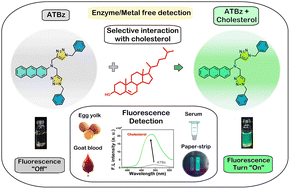
Cholesterol is a fundamental lipid found in animal cells, serving as a precursor in the biosynthesis of several hormones and essential vitamins. Accurate detection of cholesterol is critical for the early diagnosis and effective monitoring of cholesterol-related disorders, including cardiovascular diseases and liver diseases. Herein, we report a rapid and straightforward enzyme- and metal-free strategy for cholesterol detection using an anthracene–triazole fluorescent molecule, ATBz, synthesized via copper-catalyzed azide–alkyne click reaction (CuAAC). The synthesized ATBz was thoroughly characterized using various techniques, including 1H and 13C NMR, LC-MS, FT-IR, and UV-vis absorption and emission spectroscopy. Interestingly, the ATBz molecule exhibits selective interaction with cholesterol, resulting in a fluorescence turn-on response characterized by bright green emission and a slight blue shift of about 12 nm (Δλ). The presence of cholesterol is proposed to facilitate the formation of rigid assemblies, which restrict the molecular motion of ATBz and trigger aggregation-induced emission. It exhibits a limit of detection (LOD) of (100 ± 1.4) nM and a binding constant of (1.29 ± 0.24) × 105 M−1. The observed fluorescence enhancement was further validated through time-correlated single photon counting (TCSPC), quantum yield measurements, FESEM, PXRD and NMR analyses. The practical applicability of ATBz was evaluated in real samples, including egg yolk, human serum, and goat blood. Furthermore, a paper-based test strip was developed for cholesterol detection, highlighting its potential utility in clinical diagnostics.
 Please wait while we load your content...


