


 PLATFORM UPDATE:


A multifunctional anti-swelling hydrogel with high stretchability and adhesion for wearable flexible sensors
 *ab
*ab
Abstract
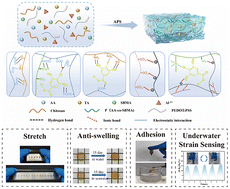
Hydrogels have properties such as softness and stretchability, making them widely used in smart wearable electronics. However, they tend to swell underwater, limiting their application scenarios. This work presents an ACTA-SP hydrogel prepared using chitosan (CS) and a copolymer (AA-co-SBMA) consisting of acrylic acid and [2-(methacryloyloxy)ethyl]dimethyl-(3-sulfopropyl) ammonium hydroxide, tannic acid (TA), Al3+ metal ions, and the conductive polymer poly(3,4-ethyl-enedioxythiophene)/poly(styrene sulfonate) (PEDOT:PSS). This multifunctional hydrogel exhibits outstanding anti-expansion properties in various solution environments. Meanwhile, it exhibits underwater adhesion to various substrates and excellent tensile strength (1072%). In the field of sensor applications, this hydrogel can achieve a wide detection range of 0–500% and a high strain coefficient of GF ≈ 6.66. It is notable that the ACTA-SP hydrogel can achieve precise, continuous and real-time dynamic monitoring of human movement postures and transmit command information via Morse code. This study provides an innovative approach to design multifunctional hydrogel-based underwater wearable sensors and expands the prospects for the application of hydrogels in flexible wearable devices.
 Please wait while we load your content...


