


 PLATFORM UPDATE:


Enhanced in vitro photodynamic performance under hypoxia-related conditions by BP–Au@MnO2–Ce6 nanocomposites
 *a
Xiaoguang
Xu
*a
*a
Xiaoguang
Xu
*a
Abstract
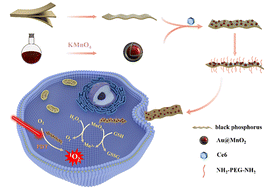
Photodynamic therapy (PDT) is a widely used therapeutic strategy that kills tumor cells through singlet oxygen (1O2) generated by the combined action of a photosensitizer, oxygen, and light irradiation. However, the efficacy of PDT is often limited by hypoxia, elevated glutathione (GSH) levels in solid tumors, and the hydrophobicity of photosensitizers. Herein, BP–Au@MnO2–Ce6 nanocomposites based on black phosphorus nanosheets (BPNS) were constructed to enhance photodynamic performance under hypoxia-related conditions in vitro. In the nanocomposites, BPNS serve as both a photosensitive component and a structural platform for the assembly of Au nanoparticles and Ce6 after PEI modification, thereby enhancing light utilization during PDT. MnO2 can catalyze the decomposition of endogenous H2O2 to generate oxygen and can also consume GSH, thereby supporting singlet oxygen generation and reducing the intracellular antioxidant scavenging capacity. The experimental results indicate that the BP–Au@MnO2–Ce6 nanocomposites enable oxygen generation, GSH depletion, and enhanced 1O2 generation. Moreover, the nanocomposites exhibit good biocompatibility and inhibit tumor cell growth in vitro under both normoxic and hypoxic conditions, highlighting their potential as a multifunctional platform for hypoxia-related photodynamic enhancement.
 Please wait while we load your content...


