


Bioinspired antimicrobial peptide hydrogel dressing for the accelerated healing of infected wounds
 a
Prashant
Pandey,
a
Shubhini A.
Saraf,
e
Parasuram
Pavadai
d
and
P. S.
Rajinikanth
*a
a
Prashant
Pandey,
a
Shubhini A.
Saraf,
e
Parasuram
Pavadai
d
and
P. S.
Rajinikanth
*a
Abstract
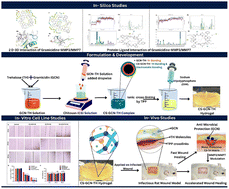
Infected wound healing is delayed due to compromised immunity and antimicrobial resistance. Antibiotic resistance is an emerging threat due to the unnecessary use of antibiotics. Current wound dressings that promote chronic wound healing either require additional processes, such as photothermal irradiation, or leave behind large amounts of undesirable residues. Gramicidin D (GCN), a mixture of gramicidin A, B, and C derived from Bacillus brevis, is a linear antimicrobial peptide that has been shown to exhibit wound healing properties in recent studies. In silico molecular docking simulations of GCN were conducted to preliminarily explore its potential interactions with proteins associated with the wound-healing process. The analysis suggested possible binding interactions with MMP3 and MMP7, indicating a hypothetical mechanism that may warrant further experimental validation, rather than establishing a direct role in the observed wound-healing effects. Therefore, in this study, we report a dual-functionality chitosan (CS) hydrogel dressing enriched with GCN and a multifunctional, non-reducing carbohydrate moiety called trehalose (TH) for combating antimicrobial resistance and accelerating infected wound healing. The GCN- and TH-enriched hydrogel matrix was successfully developed using an ionic-crosslinking method and optimised with the Box-Behnken Design (BBD) approach using Design Expert Software. The developed hydrogel formulation demonstrated controlled GCN release, suitable physicochemical properties, and excellent antibacterial and antibiofilm potential. Moreover, the in vitro cell line data on HaCaT cells indicated suitable biocompatibility, non-toxic behaviour and enhanced cell migration. Additionally, an in vivo chronic infectious wound healing study confirmed that the GCN and TH dual-functional hydrogel promotes accelerated healing in rats. This approach represents a potential therapeutic strategy for the rapid healing of chronically infected wounds in a multifunctional manner.
- This article is part of the themed collection: Wound healing materials
 Please wait while we load your content...


