


 PLATFORM UPDATE:

Self-assembled hydrogels based on natural active ingredients: mechanisms, applications and characterization

Abstract
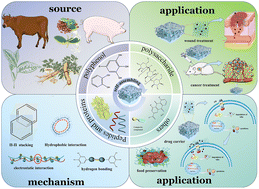
The field of biomedical materials is constantly undergoing innovations to meet increasingly complex physiological needs. A particularly prominent area of research in this regard is natural active ingredient hydrogels, which are self-assembled entirely from natural active ingredients, do not involve any chemical cross-linking agents, and have unique physicochemical and biological properties that are believed to help adapt to the complex and variable in vivo microenvironment. Hydrogels have a wide range of applications, including in critical medical areas such as wound healing, cancer therapy and drug delivery. The self-assembly process of polyphenols, polysaccharides, and proteins relies on the fine and diverse non-covalent interactions between molecules, including hydrogen bonding, electrostatic interactions, π–π interactions, and hydrophobic interactions. Polysaccharide molecules form strong networks through hydrogen bonding between sugar chains. Polyphenol molecules self-assemble through intermolecular hydrogen bonding involving hydroxyl groups and π–π interactions between benzene rings, while proteins are involved in this process through electrostatic and hydrophobic interactions due to their specific amino acid sequences and spatial conformations. In addition, these components exhibit stimulus-responsive self-assembly properties when stimulated in the physiological microenvironment. We have classified and summarized these components to identify other components with similar structures and mechanisms. This work is expected to provide theoretical support for the research on biomedical materials.
- This article is part of the themed collection: Journal of Materials Chemistry B Recent Review Articles
 Please wait while we load your content...


