


 PLATFORM UPDATE:


Tyrosine monomer nanocrystal as a potent ice recrystallization inhibition activity

Abstract
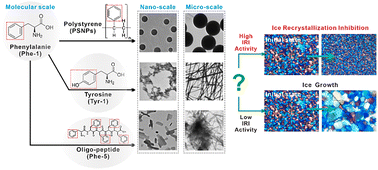
Ice growth inhibition is crucial in cryotechnology, as uncontrolled recrystallization during the frozen state and freeze-thaw cycles causes irreversible damage to biological samples. Nanoscale materials that mimic antifreeze proteins and exhibit ice recrystallization inhibition (IRI) activity have been explored as cryoprotectants; however, the structural features that govern potent IRI activity remain unclear. This study investigated the effects of nanoparticle size and functionality on the IRI activity. Polystyrene nanoparticles (PSNPs, 30–1000 nm) were used as inert nanoscale models, and amino acid derivatives with phenyl groups with or without hydroxyl functionality, including L-phenylalanine monomers, pentamers of L-phenylalanine (Phe-5), L-tyrosine, and 3,4-dihydroxy-L-phenylalanine, were examined. Among these, we found that tyrosine monomer nanocrystals (TMNs) display exceptionally potent IRI activity under both extracellular and intracellular conditions, which is attributed to nanoscale structure formation, hydroxyl functionality, and high colloidal stability. TMNs enhance cell survival during cryopreservation, even at low dimethyl sulfoxide concentrations, whereas Phe-5 and other analogs show limited activity owing to aggregation or lack of hydroxyl groups. These results elucidate the key factors influencing IRI activity, including nanoscale assembly with high colloidal stability and the presence of a hydroxy functional group. Therefore, considering the biocompatibility of L-tyrosine, our study shows that TMNs are promising supplementary materials for cryobiology.
 Please wait while we load your content...


