


 PLATFORM UPDATE:


Mechanistic model for improved performance of mRNA–LNPs formulated under turbulent mixing conditions

Abstract
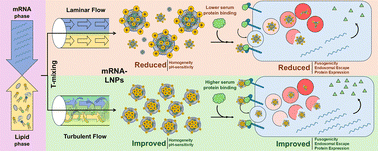
mRNA delivery using lipid nanoparticles (LNPs) has become a cornerstone of modern biological therapeutics. During the formulation of LNPs, uniform mixing of LNP components is critical to ensuring desirable functional properties. This study employs simple bi-directional T-mixing of lipids in ethanol with mRNA in buffer to evaluate the effects of mixing chamber turbulence on mRNA–LNP biophysical attributes and develops a mechanistic model relating the mixing processes to biological performance. LNPs encapsulating hEPO mRNA formulated under turbulent mixing conditions with ionizable lipid OF-02 demonstrate higher hEPO expression than those formulated under laminar mixing conditions via two routes of administration in an in vivo mouse model. By measuring LNP zeta potential, fusogenicity, and lipid fluidity as functions of pH, we propose a hypothetical model for increased pH-sensitivity of the turbulently formulated LNPs, presumably resulting in improved intracellular release of mRNA. Unique profiles measured by small-angle X-ray scattering (SAXS) and greater homogeneity observed by cryo-TEM for LNPs formulated under turbulent mixing conditions further support this model. Increased serum protein binding for these turbulently mixed mRNA–LNPs suggests an additional mode of action involving receptor-mediated uptake following systemic delivery. A follow-up study with LNPs made with reduced lipid : mRNA mass ratios indicates that turbulent mixing may preserve LNP function with lower lipid load, compared to LNPs made with higher lipid load under laminar flow conditions. Altogether, these findings underscore important connections between LNP performance and formulation process, offering valuable insights for optimization of mRNA–LNP formulations.
 Please wait while we load your content...


