


 PLATFORM UPDATE:


Sensing-coupled sprayable hydrogel dressings enable rapid wound inflammation indication and antibacterial therapy

Abstract
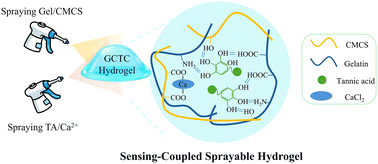
Hydrogel dressings have been demonstrated to be an effective strategy for promoting wound healing. However, most existing dressings remain confined to passive treatments focused on adhesion, antibacterial activity, and hemostasis, and they lack operability and the active sensing capabilities required for precise intervention. In this study, a multifunctional GCTC hydrogel was constructed using gelatin (Gel), carboxymethyl chitosan (CMCS), tannic acid (TA), and calcium chloride (CaCl2). This system exhibiting antibacterial and antioxidant properties can be conveniently applied to irregular wounds via spraying, achieving rapid hemostasis while tightly adhering to the wound surface. Furthermore, single-walled carbon nanotubes and poly(3,4-ethylenedioxythiophene)–polystyrene sulfonate (PEDOT:PSS) were incorporated to fabricate an electrochemical sensor capable of in situ monitoring of local IL-1β levels (detection range: 0.41 pg mL−1 to 1000 pg mL−1), which essentially meets the requirements for inflammation assessment and provides critical guidance for timely intervention. In addition, the GCTC hydrogel effectively suppresses inflammatory responses, promotes collagen deposition and epithelial regeneration, and significantly accelerates the healing of full-thickness skin defects. This research offers a new avenue for developing wound treatment platforms capable of real-time monitoring.
- This article is part of the themed collections: Wound healing materials and Journal of Materials Chemistry B HOT Papers
 Please wait while we load your content...


