


 PLATFORM UPDATE:


Polarity-triggered high-contrast fluorescent imaging of lipid droplets via a naphthalimide fluorophore

Abstract
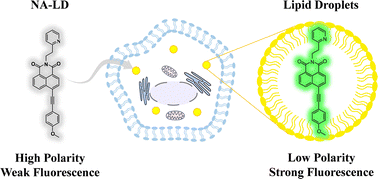
Lipid droplets (LDs) are complex and dynamic organelles and are involved in a variety of biological processes. Notably, some severe diseases are usually initiated by aberrant alterations of LDs. Consequently, the development of reliable methods is essential for elucidating the biological functions of LDs. In this study, an ICT-based naphthalimide fluorescent probe NA-LD was elaborately designed and synthesized for high-contrast and specific imaging of LDs. NA-LD was constituted of 1-ethynyl-4-methoxybenzene (the electron-donor group), diamide (the electron-acceptor group) and 2-ethylpyridine (balancing the lipophilicity and hydrophilicity). A series of analyses demonstrated that NA-LD exhibited high lipophilicity (clogP = 5.8), a large Stokes shift (Δλmax = 201 nm) and excellent biocompatibility. Additionally, NA-LD showed a sensitive fluorescent response to polarity in a linear range from Δf = 0.228 to 0.301, and the fluorescence intensity of NA-LD in low polarity media was 101-fold stronger than that in high polarity media. Furthermore, the specific, high-contrast and dynamic imaging of LDs was successfully achieved, and the obvious difference in LDs between cancer cells and normal cells was observed. All these features render NA-LD a practical tool for deciphering the mechanism of LD-related diseases.
 Please wait while we load your content...


