


 PLATFORM UPDATE:

A biofilm-penetrating nanozyme robot for drug-free inactivation of drug-resistant bacteria

Abstract
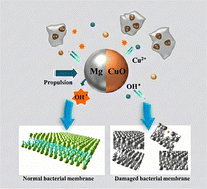
The emergence of antibiotic-resistant bacterial infections mainly due to the proliferation of bacterial biofilms poses a critical clinical challenge. The low efficacy of currently used antibacterial agents, caused due to their poor penetration into biofilms, hinders their therapeutic potential. Here, we report a drug-free, nanozyme-based, self-propelling Janus nanobot engineered to penetrate bacterial biofilms and eradicate drug-resistant pathogens through a synergistic physical–chemical mechanism. The nanobot is fabricated using magnesium (Mg) nanoparticles as a propulsion core, which generate hydrogen bubbles upon reaction with water, and a hemispherical copper oxide (CuO) shell that imparts catalytic and bactericidal activities. The CuO shell catalyses Fenton-like reactions in response to elevated hydrogen peroxide levels within bacterial microenvironments, producing reactive oxygen species (ROS) that induce oxidative stress, membrane disruption, and cell death. Autonomous propulsion enables the nanobots to actively traverse the dense extracellular polymeric matrix of biofilms, thereby enhancing the antibacterial effect. The Mg–CuO (MCO) nanobots achieved efficient biofilm removal and significant reduction in cell viability against S. aureus (MIC – 256 µg mL−1), P. aeruginosa (MIC – 512 µg mL−1), and MRSA (MIC – 1024 µg mL−1). This drug-free, self-powered nanozyme platform effectively overcomes diffusion-limited biofilm barriers and demonstrates potent activity against antibiotic-resistant bacteria, offering strong translational potential for the treatment of chronic and drug-resistant infections.
- This article is part of the themed collection: Antimicrobial materials
 Please wait while we load your content...


