


 PLATFORM UPDATE:


Proteomics in tissue regeneration: insights into protein alterations and post-translational modifications during healing
 *a
Milon Selvam
Dennison
e
and
*a
Milon Selvam
Dennison
e
and
Abstract
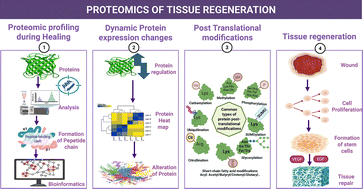
Tissue regeneration is a complex, multi-phase process orchestrated by dynamic changes in protein expression and post-translational modifications (PTMs). Proteomics has emerged as a transformative tool for decoding these molecular events, providing comprehensive insights into the mechanisms underlying wound healing, angiogenesis, extracellular matrix remodeling, and stem cell differentiation. High-throughput proteomic technologies, including mass spectrometry, quantitative labeling approaches, and spatial/single-cell analyses, enable the identification of phase-specific protein signatures and PTMs such as phosphorylation, glycosylation, ubiquitination, acetylation, and redox modifications. Mapping these proteome alterations across the inflammatory, proliferative, and remodeling phases reveals critical biomarkers, therapeutic targets, and regulatory networks driving tissue repair. Translational applications of proteomics include the development of predictive biomarkers for wound healing prognosis, PTM-targeted therapies, and stem cell or exosome-based regenerative interventions. Moreover, patient-specific proteomic signatures offer avenues for personalized medicine strategies in regenerative care. Despite technical challenges related to tissue-specific proteome complexity, dynamic PTMs, and large-scale data interpretation, integration with multi-omics approaches and artificial intelligence promises to accelerate the discovery of novel regenerative therapies. This review highlights current advances in proteomic profiling, the functional role of PTMs during tissue healing, and their clinical and translational relevance, emphasizing how these molecular insights can inform precision regenerative medicine and guide the development of next-generation interventions for improved healing outcomes.
- This article is part of the themed collections: Journal of Materials Chemistry B Recent Review Articles and Wound healing materials
 Please wait while we load your content...


