


 PLATFORM UPDATE:


Interfacial redox transformation and phytochemical capping drive the formation and protective bioefficacy of Phyllanthus acidus-derived selenium nanoparticles against Aeromonas hydrophila infection in zebrafish

Abstract
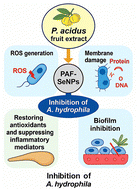
This study demonstrates the synthesis of selenium nanoparticles (PAF-SeNPs) through interfacial redox transformation using Phyllanthus acidus fruit extract as a reductant and stabilizing matrix. LC-MS/MS-QTOF profiling revealed the presence of redox-active phytochemicals, including gallic acid, caffeic acid, quercetin, kaempferol, and rutin, which facilitated electron transfer across the plant extract–selenium ion interface. These metabolites reduce Se4+ to elemental Se0 while capping the nanoparticle surface and stabilizing the colloidal system. PAF-SeNPs showed a UV–vis absorption peak at 292 nm, and FTIR analysis confirmed the presence of hydroxyl, carbonyl, and amide groups in the reduction and capping. The PAF-SeNPs displayed predominantly spherical to quasi-spherical morphology with an average diameter of ∼24.87 nm, as determined by HR-TEM, and a negative surface charge (−22.89 mV), indicating stability and monodispersity. Biological evaluation showed potent antibacterial activity against Aeromonas hydrophila with a MIC of 62.37 ± 2.20 µg mL−1, with the antimicrobial mechanism mediated by ROS generation, membrane disruption, and leakage of intracellular biomolecules. In vivo zebrafish embryo studies confirmed biocompatibility (100 µg mL−1) and protective efficacy against A. hydrophila infection (75 µg mL−1). PAF-SeNP treatment reduced oxidative stress by suppressing ROS levels, restoring antioxidant enzyme levels (SOD, CAT, and GPx) and downregulating inflammatory mediators (TNF-α, IL-1β, IL-6, and COX-2). The redox activity of selenium and phytochemical corona of P. acidus provided antioxidant and anti-inflammatory properties. These findings show that interfacial redox transformation and phytochemical capping govern the formation, stability, and bioefficacy of PAF-SeNPs, indicating their potential as eco-safe nanotherapeutics for infection control and aquaculture health management.
- This article is part of the themed collection: Antimicrobial materials
 Please wait while we load your content...


