


 PLATFORM UPDATE:


Controlled release of bone morphogenetic protein-2 improves motor function after traumatic brain injury in a rat model

Abstract
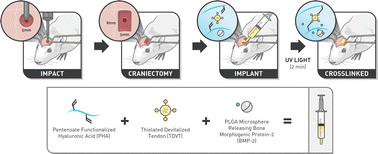
Severe traumatic brain injury (TBI) is a life-threatening condition characterized by brain swelling within the cranial vault and commonly treated using a two-stage surgical approach. The interval between surgeries, generally spaced weeks to months, is associated with secondary neurologic complications from leaving the brain unprotected. Hydrogels may reshape TBI treatment by enabling a single-stage surgical intervention, capable of being implanted during the initial surgery, remaining flexible to accommodate brain swelling, and calibrated to regenerate bone after brain swelling has subsided. The current study evaluated the use of a pentenoate-modified hyaluronic acid (PHA) polymer with thiolated devitalized tendon (TDVT) for calvarial bone regeneration in a rat TBI model. Additionally, PHA-TDVT hydrogels encapsulating microspheres containing bone morphogenetic protein-2 (BMP-2) were investigated to enhance bone regeneration. All hydrogel precursor formulations exhibited sufficient yield stress for surgical placement. The addition of TDVT to the crosslinked hydrogels increased the average compressive modulus. In vitro cell studies revealed that the PHA-TDVT hydrogel with the highest concentration of BMP-2 microspheres (i.e., PHA-TDVT + µ100) significantly improved calcium deposition and osteogenic gene expression. Minimal in vivo bone regeneration was observed for all hydrogel groups; however, BMP-2 microsphere addition fortuitously reduced motor skill impairment and brain atrophy. The PHA-TDVT + µ100 group had 2.8 times greater reach index and 2.3 times lower brain atrophy values compared to the negative control (p < 0.05). Overall, hydrogels with controlled release of BMP-2 may provide neuroprotective benefits in TBI treatment. Future studies will explore BMP-2 delivery strategies to enhance both bone and brain recovery in rat TBI studies.
- This article is part of the themed collections: Journal of Materials Chemistry B HOT Papers and In honour of Shelly Sakiyama-Elbert’s 50th birthday: Shaping biomaterials in neuroengineering
 Please wait while we load your content...


